Not long ago, getting advice about your cat meant one of three things: calling your vet, searching through conflicting forum posts, or asking a friend who also wasn't entirely sure. The information existed, but finding reliable, personalised guidance was genuinely difficult.
That's changing — faster than most pet owners realise.
The Old Problem With Pet Advice
The challenge with cat care information has never been quantity. There's no shortage of articles, YouTube videos, or Reddit threads about feline behaviour, nutrition, and health. The problem is reliability and relevance.
Generic advice doesn't account for your cat's age, breed, history, or personality. A senior indoor-only cat and a young outdoor tabby have very different needs, but the same search query returns the same results for both. And distinguishing between well-researched guidance and confident misinformation requires expertise most pet owners don't have.
Vets are the obvious solution, but a 15-minute appointment every few months — often triggered by a health concern rather than a wellness check — isn't a substitute for the ongoing, day-to-day questions that accumulate between visits.
What AI Changes
AI tools trained on veterinary literature, animal behaviour research, and established pet care knowledge can now provide something that wasn't previously accessible to most people: instant, reasonably reliable, contextualised guidance.
Ask an AI assistant whether your cat's sudden preference for hiding is cause for concern, and a good system won't give you a generic list. It will ask clarifying questions — how old is your cat, are there any other symptoms, has anything changed at home — and provide a response that accounts for context.
This isn't a replacement for veterinary care. No responsible AI pet tool claims to diagnose illness or prescribe treatment. But it fills the enormous gap between "I have a quick question" and "I need to book a vet appointment," which is where most pet care questions actually live.
AI-Generated Cat Photos: A Surprisingly Useful Feature
One of the more delightful applications of AI in the cat space is image generation — specifically, transforming your cat's existing photos into creative styles.
What started as a novelty has found real practical uses. Cat ID photos — passport-style portraits with consistent lighting and framing — are useful for microchip registrations, lost-cat alerts, and pet insurance documents. Having a clear, professional-quality portrait of your cat turns out to matter more than most owners anticipate until they need one.
Beyond the practical, AI-generated art styles — 3D figurines, plush toy renders, stylised portraits — have become a way for cat owners to celebrate their pets in a new medium. Cathena's Creative Studio lets you upload a photo of your cat and generate any of these styles in seconds, using AI image models that understand feline anatomy and produce results that actually look like your specific cat, not a generic one.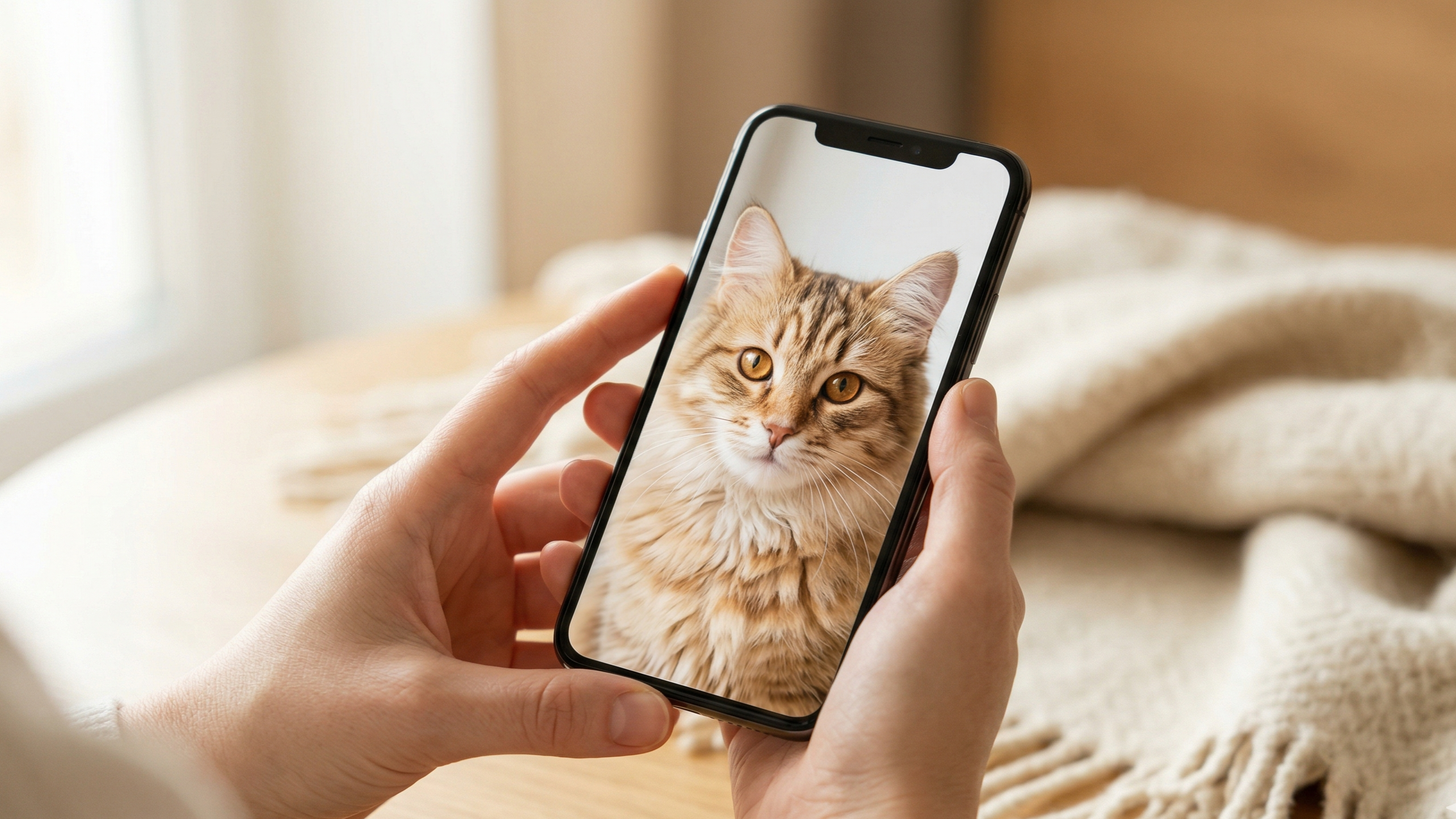
Growth Tracking and the Quantified Cat
Another area where technology is making meaningful inroads is health and behaviour tracking. Maintaining a log of your cat's weight, eating habits, activity levels, and notable behaviours over time creates a baseline — and deviations from that baseline are often the earliest signal of a developing health issue.
Cathena's Growth Journal does this within an app: you record daily notes and photos, and the AI Insight feature analyses your entries to provide personalised feedback. Over time, it builds a picture of your cat's normal that you can reference, share with a vet, or simply use to notice changes earlier than you otherwise might.
The Limits Worth Knowing
AI tools in pet care are genuinely useful — and genuinely limited. They're best understood as knowledgeable, available, and patient assistants rather than professionals.
For anything involving physical symptoms, sudden behavioural changes, or suspected illness, a licensed veterinarian remains essential. AI can help you decide whether something warrants a vet visit and prepare you to describe the issue clearly — that's a real and valuable role. But it's not a substitute for examination, diagnosis, or treatment.
The most effective approach combines both: use AI tools for the daily questions, ongoing tracking, and between-visit guidance. Reserve veterinary appointments for what they're uniquely equipped to do.
Where This Is Going
AI pet care tools are still early. The current generation is useful; the next will be considerably more so. As models improve and as tools accumulate more data about individual animals over time, the guidance will become more personalised and more accurate.
For cat owners, this is straightforwardly good news. Better information, more accessible, means better outcomes for cats — and fewer anxious 2am searches trying to figure out whether something is normal.
Cathena brings AI-powered guidance, creative tools, and a growth journal together in one app — designed specifically for cat owners. Explore Cathena and see what it can do for you and your cat.