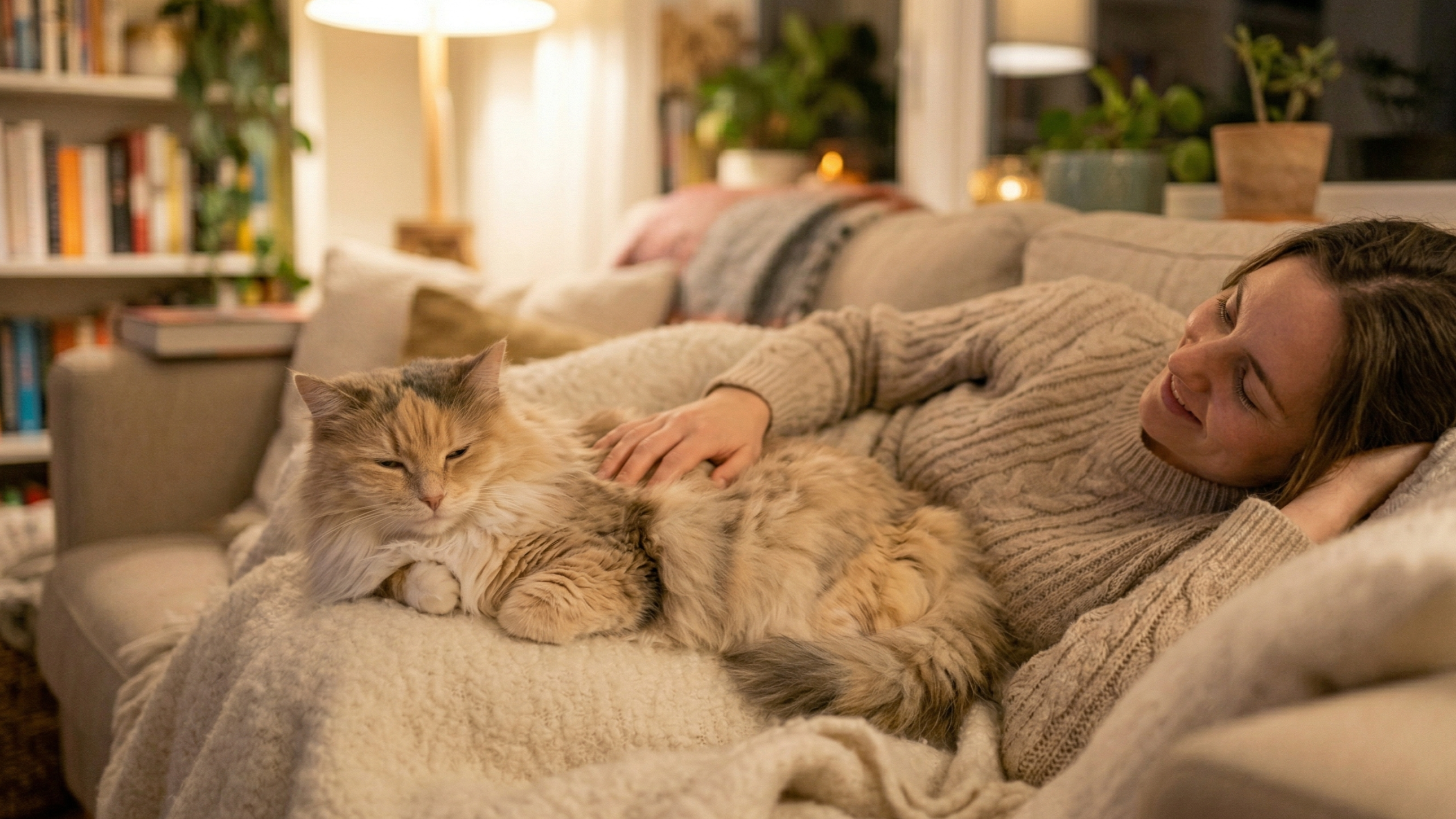
Cats have a reputation. Aloof. Independent. Indifferent. The internet has built an entire aesthetic around the idea of cats tolerating their owners rather than loving them. But is any of that actually true?
The science suggests the reputation is largely undeserved — and that cats form emotional bonds that are more sophisticated than most people realise.
What the Research Says
A landmark 2019 study from Oregon State University tested cat attachment using the same "Strange Situation" protocol developed to measure attachment in human infants and dogs. Cats were briefly separated from their owners in an unfamiliar room, then reunited.
The results were striking. Around 65% of cats showed what researchers classified as "secure attachment" — returning to explore after reunion, using their owner as a safe base. This figure is nearly identical to what's observed in human infants and dogs in the same test.
Cats, it turns out, do form genuine attachment bonds. They just express them differently.
How Cats Show Affection
The problem is that we often look for dog-like expressions of love in cats and find them absent. Cats don't typically run to the door, wag enthusiastically, or seek constant physical contact. But they have their own vocabulary:
Slow blinking. If your cat makes eye contact and slowly closes and reopens their eyes, this is considered a feline "smile" — a signal of trust and comfort. You can return it. Many cats will blink back.
Bringing you things. Dead birds and half-eaten insects are not ideal gifts, but they are gifts. A cat who brings you prey is including you in their social group, sharing their hunt with you the way they would with another cat they care about.
Headbutting and cheek rubbing. Cats have scent glands on their cheeks, forehead, and chin. When your cat rubs their face against you, they're marking you — not as property, but as part of their safe group. It's intimate in the cat sense of the word.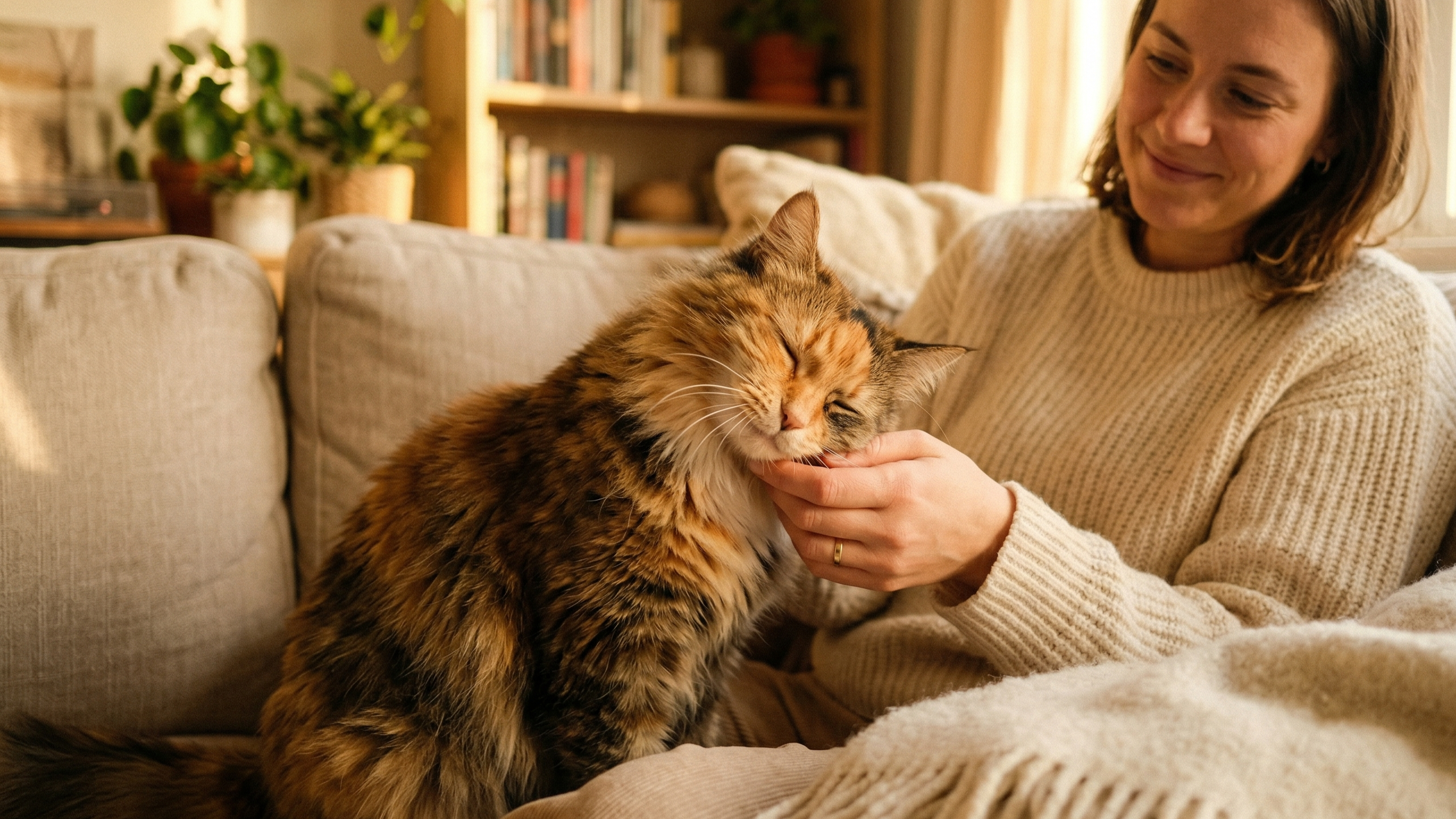
Sitting near you, not necessarily on you. Some cats express affection through proximity rather than contact. A cat who consistently chooses to be in the same room as you, even without sitting on your lap, is making a social choice. You are preferred company.
Showing their belly. A cat exposing their abdomen is displaying vulnerability. It doesn't always mean they want you to touch it — but it means they feel safe enough around you to be vulnerable.
The Attachment Is Real, Even When Cats Seem Indifferent
One of the more interesting findings from attachment research is that cats who appear indifferent to a reunion after separation often show physiological signs of stress during the separation itself — elevated cortisol, changes in behaviour. The external indifference masks internal response.
Cats feel your absence. They may not display it in an obvious way when you return, but the bond is operating quietly underneath the surface.!
Why It Matters
Understanding that your cat loves you in their own way — through proximity, slow blinks, and the occasional suspicious chirp — changes how you interact with them. You stop looking for dog-level enthusiasm and start noticing the subtle, consistent signals that were there all along.
The relationship between a cat and their human is quieter and more independent than the one between a dog and their human. But it's no less real.
Curious about your cat's behaviour and what it means? Cathena's AI Assistant can answer questions about your cat's specific habits, body language, and emotional wellbeing — available 24/7, right in your pocket. Learn more about Cathena.