Most cat owners know they should play with their cats. Fewer know how much, how often, or why the type of play matters as much as the duration. Getting this right makes a genuine difference — not just in behaviour, but in your cat's long-term physical and mental health.
Why Play Is Non-Negotiable
Domestic cats are predators who no longer need to hunt to eat. The drive is still there — the stalking, the chase, the pounce — but the outlet has been removed. This creates a gap between what their brains and bodies are built to do and what their daily life actually provides.
When that gap is too large, problems emerge: destructive behaviour, aggression, anxiety, overeating, and a general restlessness that many owners mistake for a difficult personality. In most cases, it's simply an animal whose predatory needs aren't being met.
Play is the domesticated substitute for hunting. It uses the same instincts, burns the same mental energy, and produces the same neurochemical rewards. It's not optional enrichment — it's a core need.
How Much Is Enough?
The general recommendation from feline behaviourists is two dedicated play sessions per day, each lasting 10–15 minutes. For kittens and high-energy breeds, more is better. For older or more sedentary cats, even two short sessions represent a significant improvement over none.
The timing matters too. Cats are naturally crepuscular — most active around dawn and dusk. Scheduling play in the early morning and the hour before bed tends to align with their natural energy peaks, making sessions more effective and helping reduce the 3am zoomies that plague many cat households.
The Type of Play Matters
Not all play is equally satisfying for cats. Static toys — a ball sitting in the corner, a stuffed mouse on the floor — hold attention only briefly. What cats respond to most strongly is movement that mimics prey behaviour: unpredictable, quick, with pauses and changes in direction.
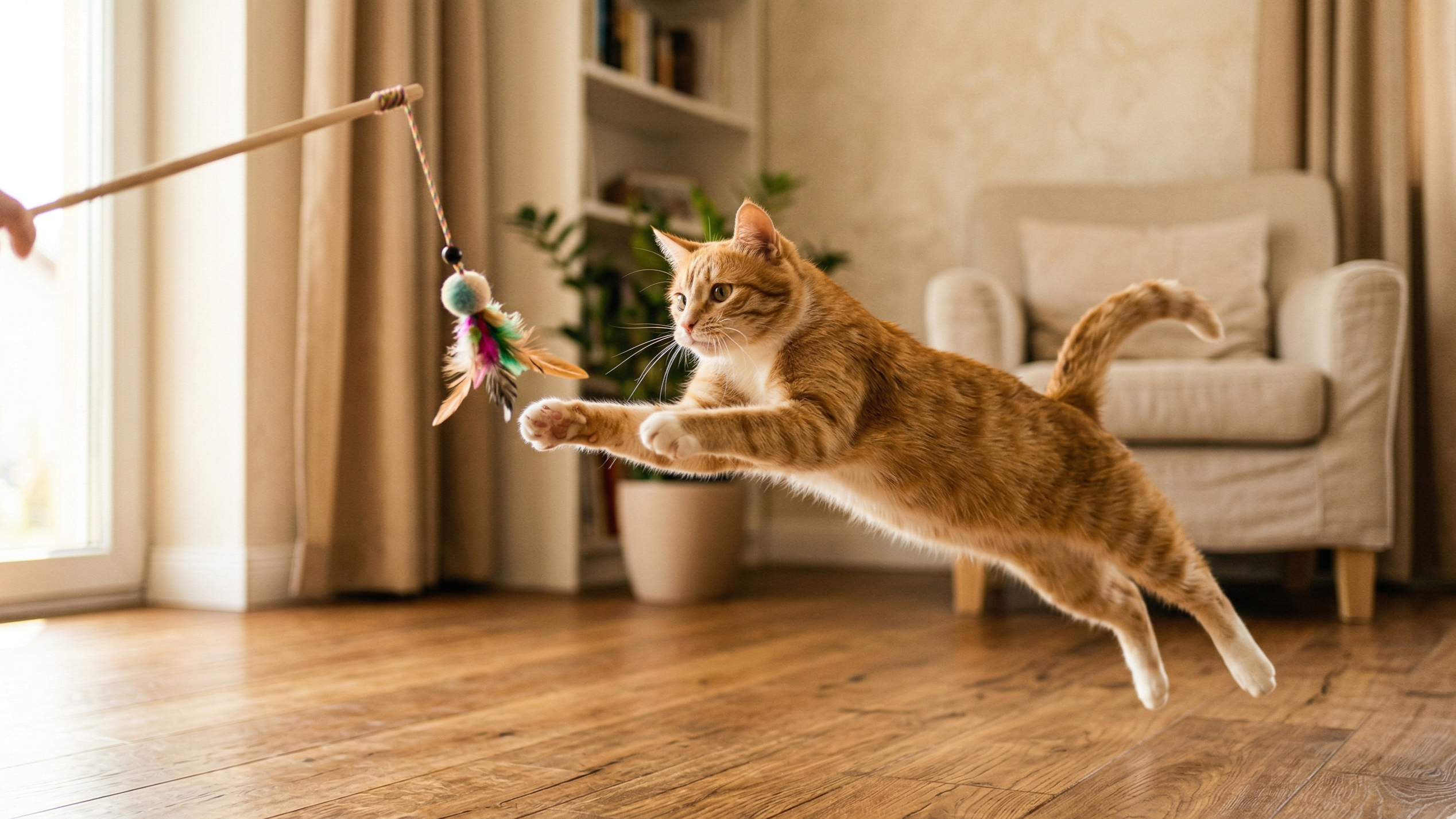
Wand toys are the gold standard for this. A feather or fabric attachment on a wand, moved with variation — fast then slow, hiding then darting — simulates a bird or mouse far more convincingly than anything that moves in a straight line.
Interactive screen games have become increasingly effective for cats who respond well to visual stimuli. Apps like CatVerse were designed around this exact principle: prey items — birds, fish, laser dots, insects — move across the screen in unpredictable patterns, triggering the chase response that cats find most satisfying. They work especially well as a supplemental option when you're busy or as an additional session beyond your daily play routine.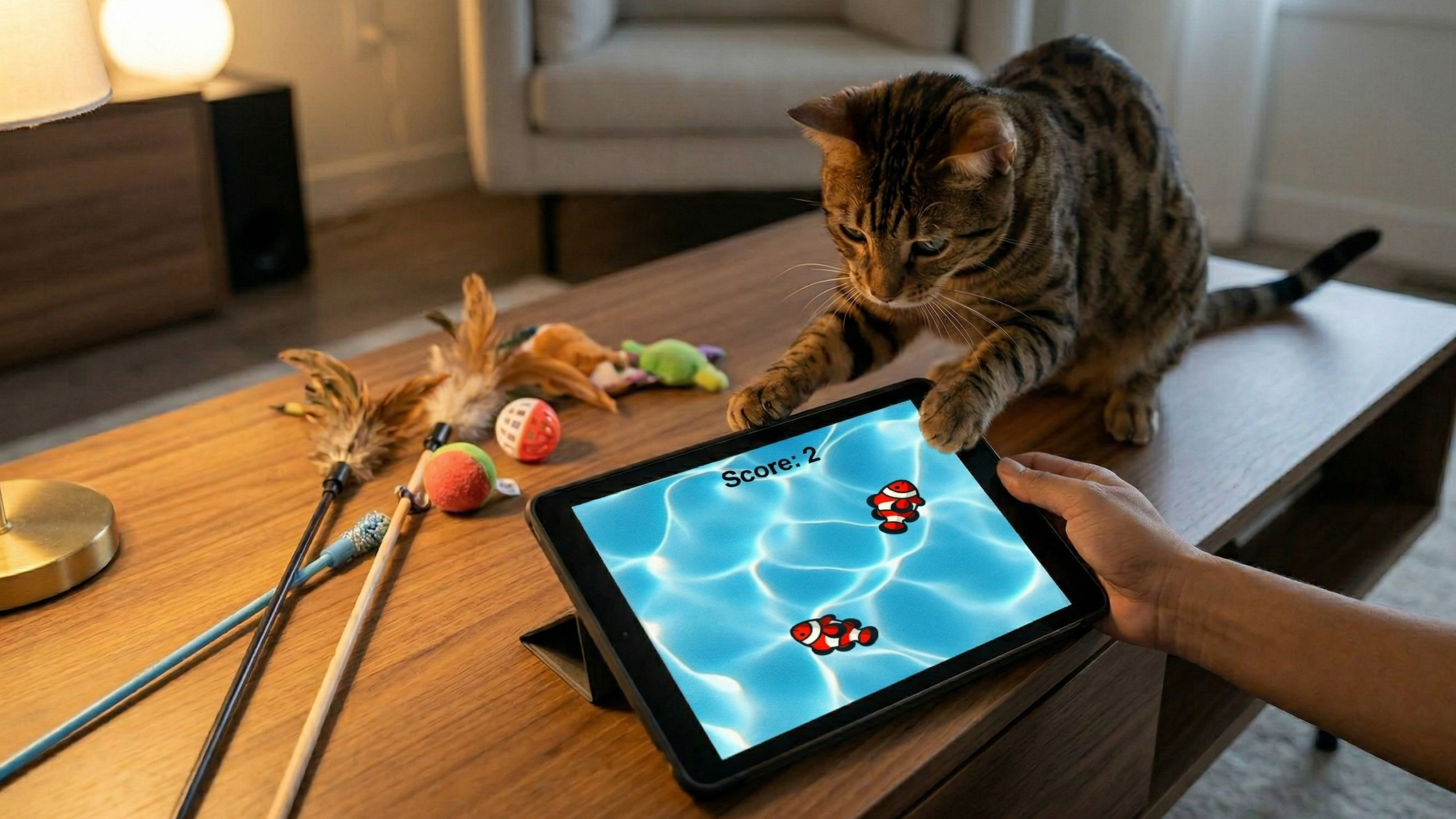
Puzzle feeders tap into a different but related instinct — the problem-solving aspect of hunting. Making your cat "work" for a portion of their food engages their brain in a way that straightforward eating doesn't.
The Complete Play Session
A good play session has a beginning, middle, and end — just like a hunt.
Start with slower, teasing movements that build arousal gradually. Move into faster, more erratic action at the peak. Then slow down and let your cat make a successful "catch." This final catch is important — cats who are repeatedly denied the satisfaction of catching their prey can become frustrated and redirect that frustration into other behaviours.
Ending with a small treat or a portion of their meal reinforces the full hunt-catch-eat sequence and leaves your cat satisfied rather than wound up.
Signs Your Cat Needs More Play
- Waking you up at night with zoomies or vocalisation
- Stalking or ambushing your ankles
- Destructive scratching or chewing
- Aggression toward other pets or people
- Overeating or obsessing over food
Any of these can have other causes, but insufficient play is almost always worth ruling out first. In many cases, adding two consistent daily sessions resolves the behaviour within a week or two.
The Payoff
A cat who gets adequate play is calmer, more affectionate, less destructive, and healthier. The investment is small — twenty to thirty minutes a day — and the returns are significant for both of you.
Looking for an easy way to add extra play to your cat's day? CatVerse gives your cat six game modes — birds, fish, lasers, mice, ladybugs, and dragonflies — right on your phone or iPad. Free to download on iOS and Android.