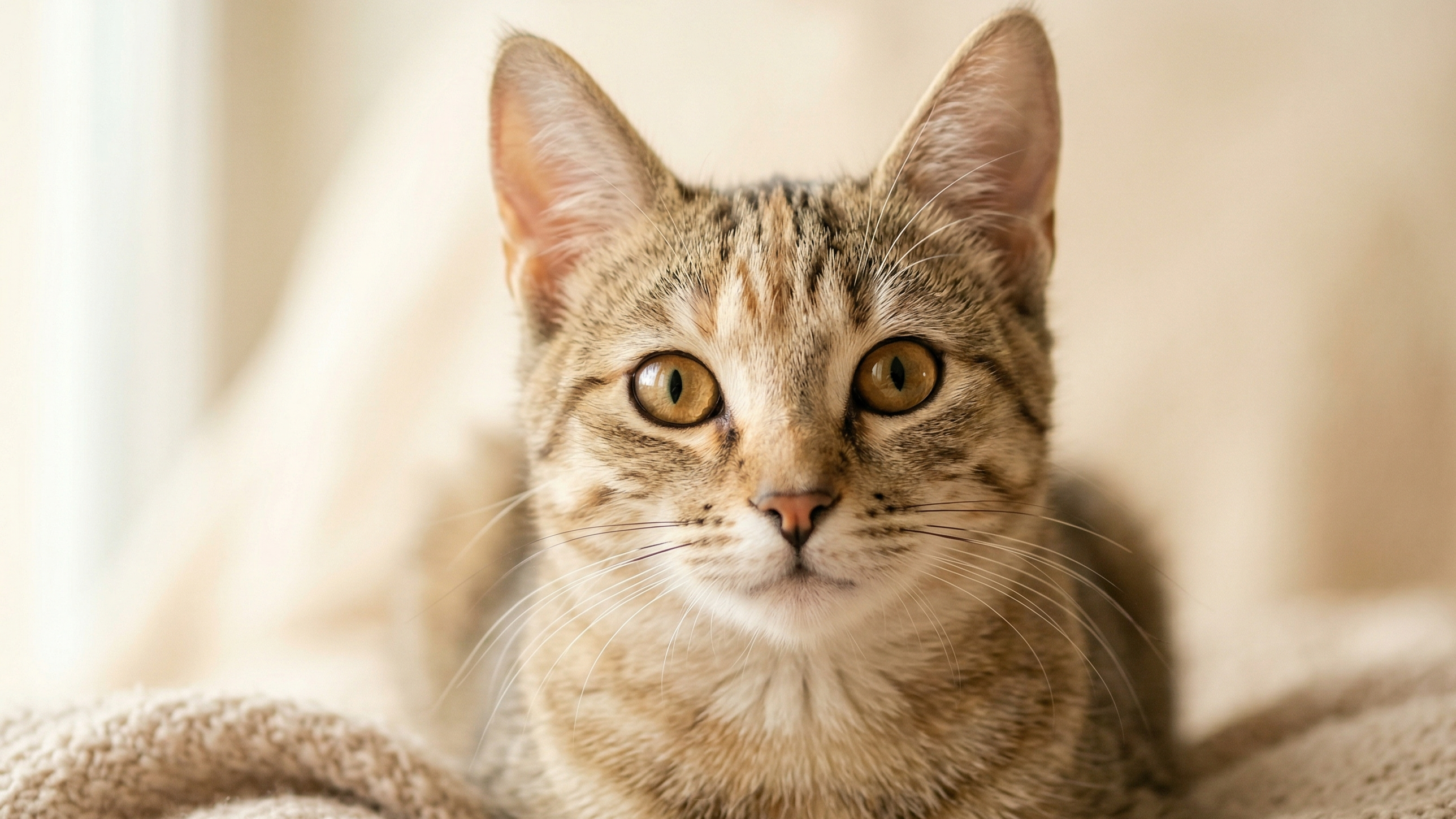
Cats communicate constantly. The problem is that their language is primarily postural and contextual rather than vocal — which means most of what they're saying goes unnoticed by the humans they live with. Learning to read what your cat is telling you changes the relationship in a fundamental way.
The Tail: The Most Expressive Tool
A cat's tail position is one of the most reliable indicators of their emotional state, and it broadcasts that state continuously.
Tail held high and vertical — confidence, contentment, and a friendly greeting. When a cat approaches with their tail straight up, they're announcing their positive intentions. It's the feline equivalent of a wave.
Tail high with a slight curve at the tip — affectionate and playful. This is often a precursor to rubbing against you.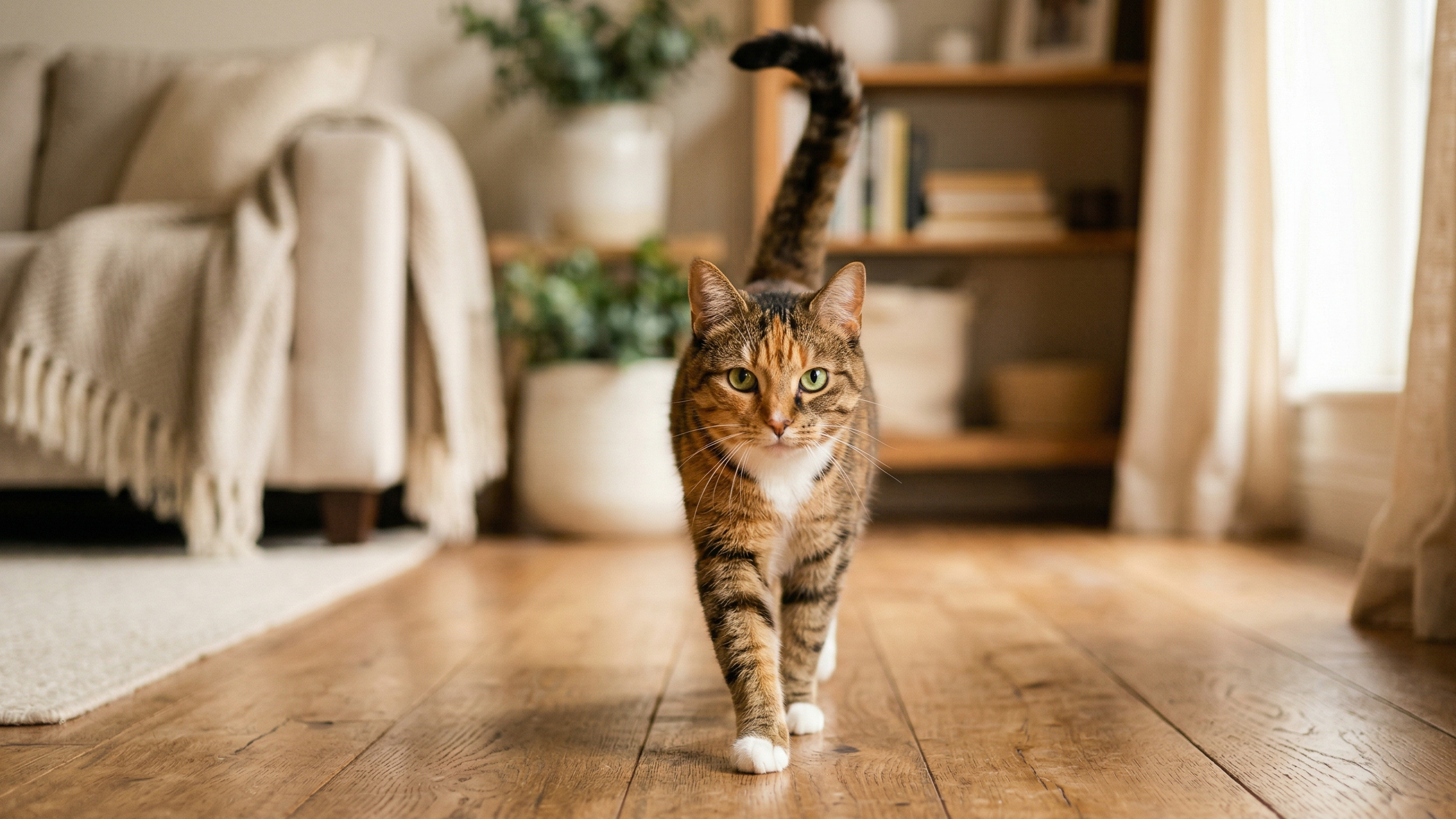
Tail puffed out (piloerection) — fear or aggression. The cat is making themselves look larger. If the puffed tail accompanies an arched back and sideways posture, they feel genuinely threatened.
Tail low or tucked — submission, anxiety, or discomfort. A cat whose tail is consistently low may be stressed or unwell.
Tail lashing rapidly from side to side — this is frequently misread as the dog equivalent of wagging, which signals happiness. It does not. In cats, tail lashing indicates agitation or intense focus. If your cat's tail is lashing while you're petting them, they're telling you they've had enough.
The Eyes: Trust, Threat, and the Slow Blink
Eye contact in cats carries significant weight. A direct, unblinking stare is a threat or a challenge. Among cats, holding eye contact is an assertion of dominance; breaking it first is submission.
This is why cats frequently choose to sit on or near people who claim not to like them. The self-described non-cat-person, uncomfortable with the animal, avoids eye contact — which the cat reads as non-threatening and safe.
Slow blinking — often called the "cat kiss" — is a deliberate signal of trust and relaxation. When your cat blinks slowly at you, they're communicating that they feel safe and comfortable in your presence. You can return it: make soft eye contact, then slowly close and open your eyes. Many cats will respond in kind.
Dilated pupils — can indicate excitement, fear, or low light. Context matters enormously here. Dilated pupils during play are normal; dilated pupils in a bright room alongside other stressed body language signals anxiety or aggression.
Half-closed eyes — contentment and relaxation. A cat who is truly comfortable will often have slightly drooping eyelids. It's the same expression humans get when they're pleasantly drowsy.
The Ears: Real-Time Emotional Display
Cats' ears can rotate almost 180 degrees and are in near-constant motion, scanning for sound. But their position also reflects emotional state:
Forward and upright — alert, interested, engaged. Your cat is paying attention to something.
Slightly turned out and relaxed — calm and content. This is the resting position of a comfortable cat.
Flattened sideways ("airplane ears") — irritation or mild anxiety. This is a warning that usually precedes stronger signals if whatever is causing the response continues.
Flattened fully back against the head — fear or aggression. This is a defensive position; the cat is protecting their ears from potential harm and signalling that they feel threatened.
Body Posture: The Full Picture
Individual signals always need to be read in the context of the whole body:
Loaf position (sitting with paws tucked under, no legs visible) — contentment and relaxation. A cat in loaf is comfortable enough to sit without their legs available for immediate escape.
Exposed belly — this is widely misread. A cat showing their belly is displaying vulnerability and trust. It does not necessarily mean they want their belly rubbed — many cats find direct belly touching overstimulating. What they're communicating is comfort in your presence, not an invitation for specific touch.
Arched back with raised fur — defensive threat display. The cat is attempting to appear larger and is genuinely stressed.
Slow, deliberate approach with tail up — friendly greeting. Combine this with soft eyes and relaxed ears, and you have a cat that is happy to see you.
Reading the Whole
The key to understanding cat body language is synthesis: no single signal is definitive in isolation. A puffed tail means something different during play than during an unexpected encounter. Dilated pupils mean something different in a hunting cat than in a cat who has just heard a loud noise.
Watch the tail, ears, eyes, and posture together, in context. With practice, it becomes natural — and the result is a communication channel that most cat owners never fully open.
Want to understand your specific cat's behaviour patterns better? Cathena's AI Assistant can answer questions about what your cat's actions mean and how to respond to them. Explore Cathena.