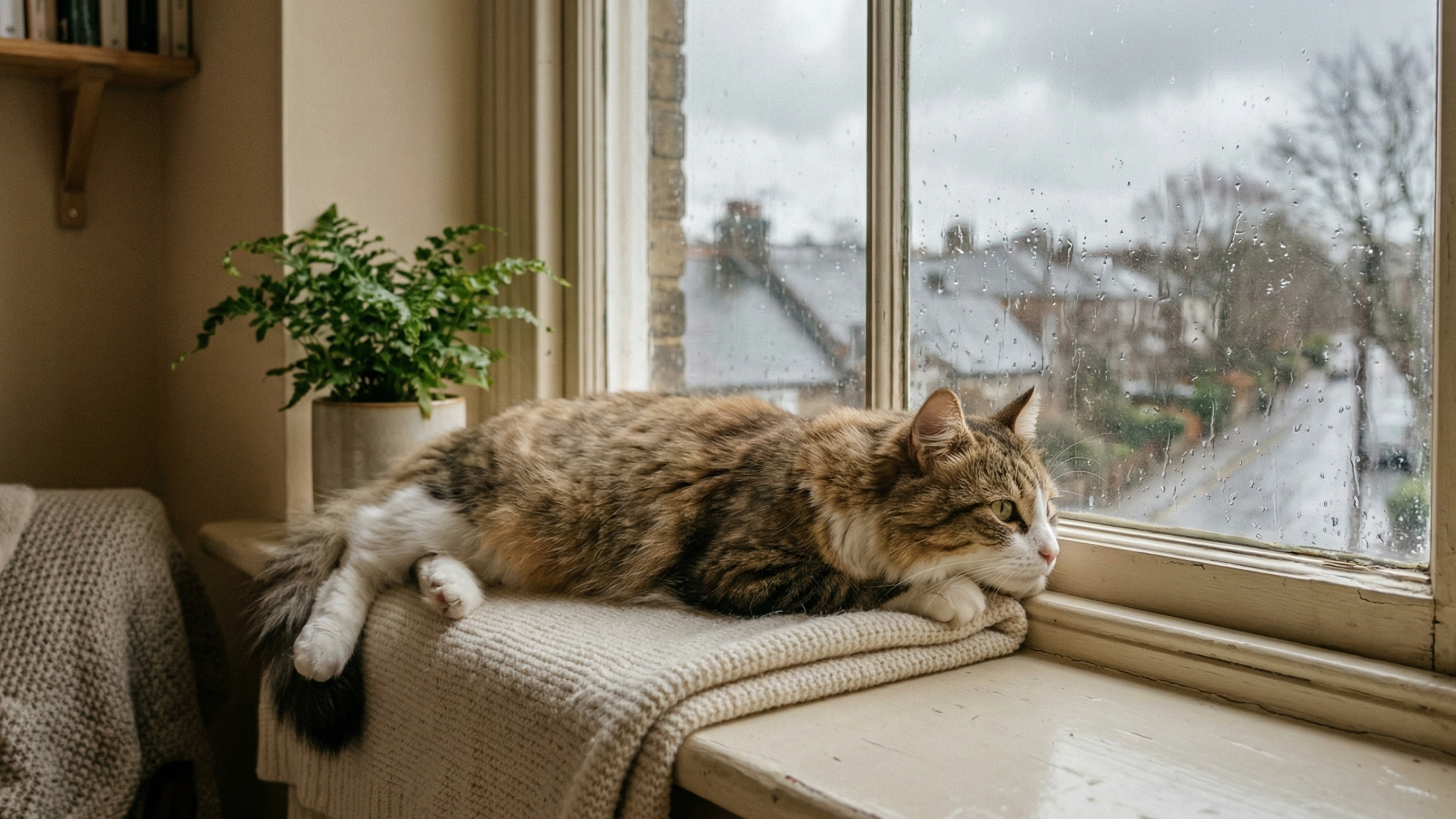
Indoor cats live longer, safer lives than their outdoor counterparts. They avoid traffic, predators, disease, and the host of dangers that shorten outdoor cats' lifespans considerably. But safety comes with a tradeoff: the indoor environment, however comfortable, is a small and largely unchanging world for an animal whose brain evolved for something much more stimulating.
Boredom in cats is real, underdiagnosed, and correctable. Here's what it looks like and what to do about it.
What Cat Boredom Actually Looks Like
Cats don't mope visibly the way dogs sometimes do. Their boredom tends to manifest as behaviour problems rather than obvious sadness, which means it often goes unrecognised.
Overgrooming is one of the more common signs — excessive licking, sometimes to the point of creating bald patches. When there's no medical explanation, this is frequently a stress or boredom response, a self-soothing behaviour that fills the hours.
Increased vocalisation — particularly persistent yowling or meowing without obvious cause — often indicates an understimulated cat seeking engagement.
Aggression toward other pets or people, especially ambush-style attacks, frequently reflects predatory energy that has nowhere appropriate to go.
Overeating or obsessive interest in food can develop when a cat's day lacks other sources of stimulation. Food becomes the highlight, and cats eat out of boredom the way humans do.
Destructive behaviour — scratching furniture, knocking things over, chewing cords — is often about engagement rather than malice. Something is happening when these behaviours occur; the problem is that the wrong things are getting the attention.
The Core Issue: Environmental Monotony
An outdoor cat's day involves constantly changing sensory input — new smells, unpredictable sounds, movement in the periphery, the ever-present possibility of prey. The brain is processing continuously.
An indoor cat's day, by contrast, involves the same rooms, the same smells, the same view from the same window. Unless something changes, the brain has nothing new to process. For an animal whose nervous system evolved in constant readiness for stimulus, this is genuinely stressful.
The solution isn't to let your cat outdoors. It's to bring enough variation and stimulation indoors that the environment feels dynamic.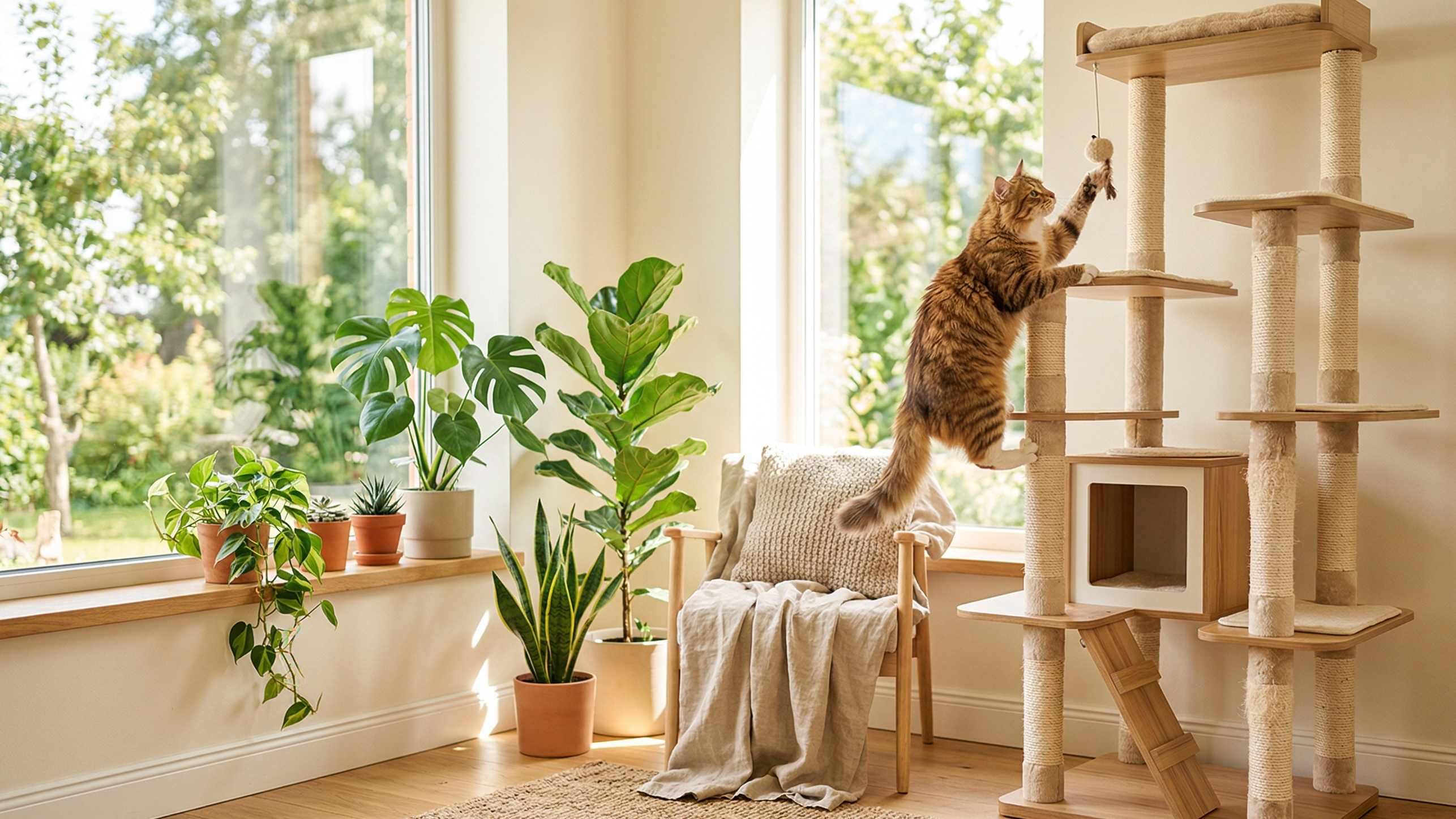
Practical Enrichment That Actually Works
Window access with something worth watching. A perch at a window overlooking a garden, a bird feeder, or even a busy street gives your cat hours of passive entertainment. The movement alone — birds, leaves, people — provides the visual stimulation their brains are looking for.
Rotating toys. Don't leave all toys available all the time. Cats habituate quickly to the same objects. Keep a rotation and swap toys every few days. The return of a previously absent toy can generate genuine renewed interest.
Vertical space. Cat trees, wall shelves, and accessible high surfaces expand the effective size of your cat's territory significantly. Height is security and interest to a cat — new vantage points change how the same space is experienced.
Interactive play sessions. This remains the single most effective form of enrichment. Movement that mimics prey behaviour — unpredictable, fast, varied — engages the predatory sequence and burns mental energy far more effectively than physical exercise alone. Two sessions of 10–15 minutes daily makes a measurable difference.
Screen-based games. For cats who respond to visual stimuli, interactive cat apps provide a form of enrichment that works well as a supplement to direct play. CatVerse offers six game modes — birds, fish, laser dots, mice, ladybugs, and dragonflies — that move across your phone or iPad screen in patterns designed to trigger the chase response. It's particularly useful for the long stretches of the day when you're at work or otherwise occupied.
Puzzle feeders. Replacing a portion of your cat's meals with a puzzle feeder engages their problem-solving instincts and slows eating. It turns feeding time from a passive event into a brief but meaningful mental workout.
Introducing new smells. Cats experience the world heavily through scent. Rotating safe herbs — dried catnip, silver vine, valerian root — provides olfactory novelty that's genuinely stimulating. Even bringing in a paper bag from outside, with its collection of street smells, gives your cat something new to investigate for twenty minutes.
The Cumulative Effect
No single enrichment strategy transforms an understimulated cat overnight. The goal is to raise the overall level of stimulation consistently across the day — a richer morning routine, a play session in the afternoon, something novel to investigate in the evening.
Over time, a well-enriched cat is calmer, less destructive, more affectionate, and generally healthier. The anxiety and boredom-driven behaviours ease because the underlying need is actually being met.
The indoor life is the right choice for most cats. Making it a genuinely stimulating one is simply the other half of that commitment.
Looking for an easy way to add stimulation to your cat's day? CatVerse — free on iOS and Android — gives indoor cats something worth chasing, right on your screen.